Practice · 5 min read
Sound bath: what happens in the body during the gong
Continuous vibration slows the breath and the mind. Discover why the gong is the instrument of openings and closings.
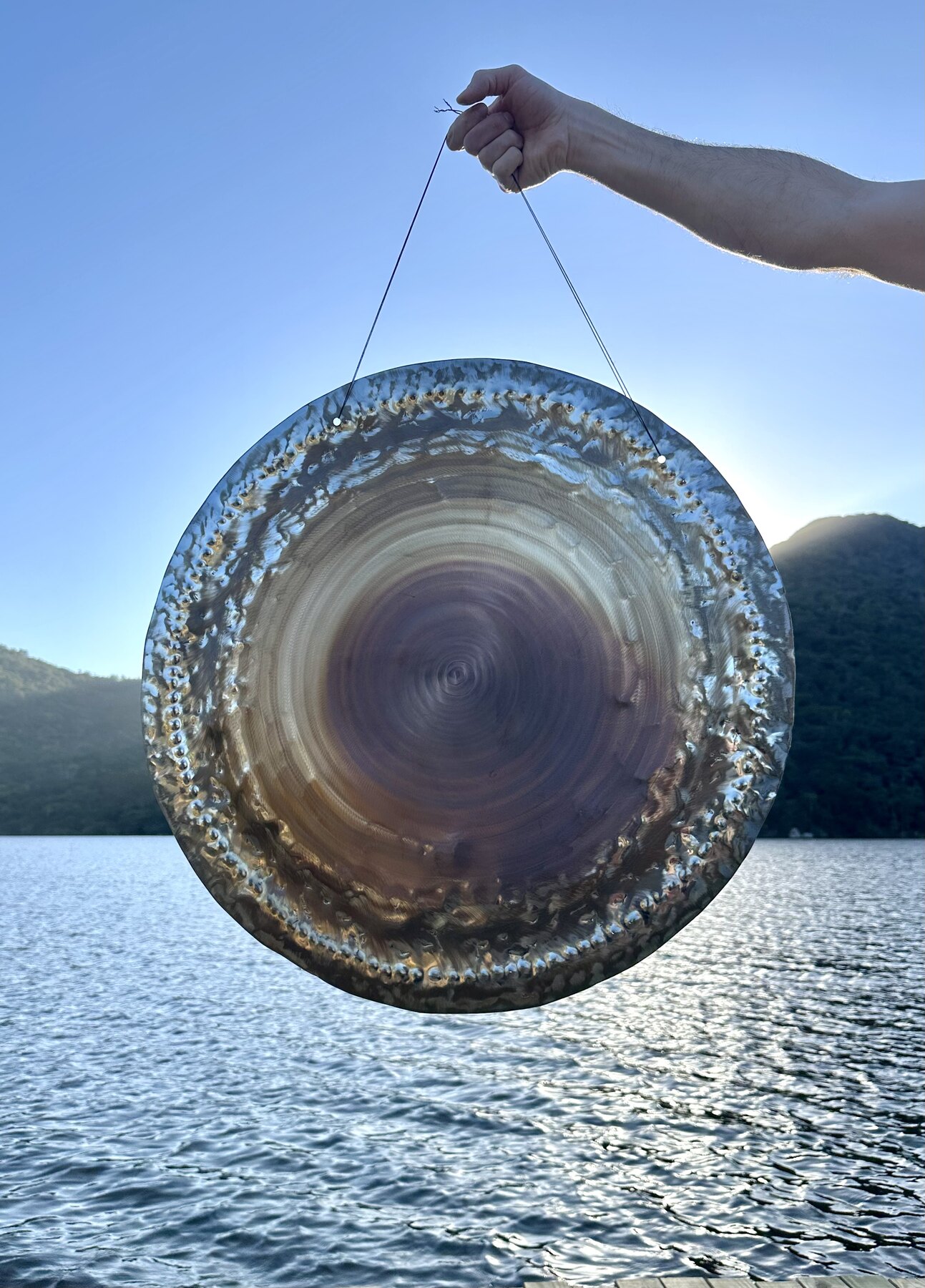
Suspended by a cord, the gong responds to the lightest touch with a cloud of harmonics that continues to expand long after the hand leaves the metal. It is this trail, rather than the strike itself, that does the work.
During a sound bath, the body is surrounded by overlapping layers of frequency. Breathing naturally follows this slower rhythm, and thought loses its usual speed. Just a few minutes can be enough for the nervous system to shift state.
In practice, the gong often opens and closes a session: a long entrance marks the beginning, guided silence occupies the middle, and a final resonance brings each person back to the room without abruptness.
The Maqam gong is hammered one strike at a time, without stamping. Its irregular surface is precisely what creates the rich harmonics and long sustain that define the instrument.
Would you like to discover the instruments?
Tell us what you are looking for and we will help you find the right instrument.